
Peggy's Story: Inclusive Mining, Built for Participation
A VP once asked Peggy to make a board presentation "pretty." She opened the file and found the real problem: the story was missing. That moment captures her career, and why she joined Maven to make credibility operational.
THE STORY OF MAVEN
Peggy Bell, Founder and Chief of Staff, Brand and Operations
1/29/20264 min read
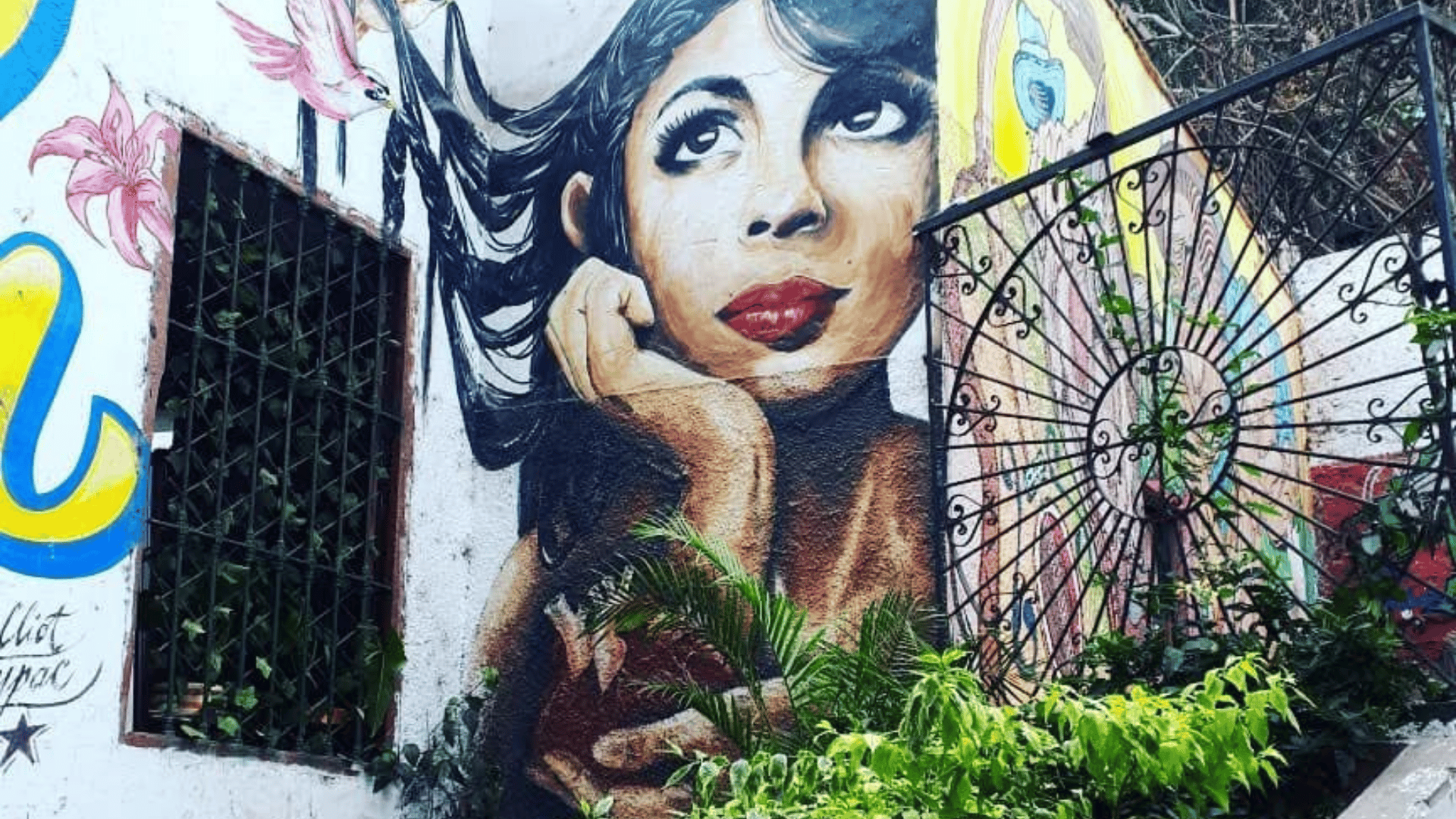
**Image curtesy of Peggy. Take in 2019 during one of her work trips to Peru. Taken in Barranco, a neighbourhood in Lima.
A VP once called me on Skype, long before Teams existed, and said he needed me to make a presentation going to the board of directors “pretty.” It was meant as a simple handoff. The deck was already written, and the job was a polish.
I opened the file and got stuck almost immediately. I went head into the sand, confused by the content and frozen by the thought of rewriting it. The audience was defined, but the deck did not tell a story with a goal, and the information was hard to follow. A former manager used to say form follows function, and the function was missing.
So I rebuilt it. I started with the logic and structure, then the messaging and goals, then the colours. I did what brand and marketing are when they are taken seriously: a discipline that translates complex industry context into plain language, so people can make decisions with trust.
That pattern followed me through mining and into Maven.
Why Maven exists
Maven opens up investment and participation in mining for people who have historically been kept at the edges. Our leadership team has developed their expertise in leadership, sustainability, communications and risk management. These skills shape our values and decisions.
For me, the “why” starts with who is allowed into the room, and how we communicate mining’s purpose to society. It includes noticing who gets to ask questions without being treated like a distraction. It means bringing those people into decisions that shape risk, timelines, and outcomes.
In mining, exclusion is not only financial, but also informational and cultural. When the story is unclear, people cannot properly evaluate risk, assumptions stay hidden, and participation narrows. People either accept what they are told, or they walk away.
I have spent my career noticing how often mining treats communication as something that happens after the technical work. That choice shows up later as risk.
Mining has a trust problem and the risk is not addressing it
I treat mining’s trust gap as branding rooted in operational reality. Trust shapes whether communities and rights holders believe a company will act responsibly, investors believe a team understands its constraints, and talent chooses to build a life in the industry.
When trust is thin, ignoring challenges or misunderstandings grow into big conflicts.
An example consistent with pandemic-era mining is the bold climate statements paired with thin roadmaps. Net-zero claims were made, but understanding how they were to be achieved was a challenge. When made with science-based targets, consistent reporting, and a credible plan for how progress will be tracked, they grow teeth. Without a process, decision risk grows and skepticism rises.
A brand, in this sense, is not a logo. Brand is the sum of what people believe will happen when you arrive in their jurisdiction, inbox, investment committee, or on their land.
If mining wants acceptance and continuity, accessibility and credibility have to become priorities. People will not support what they cannot understand, nor will they participate in what does not treat them seriously.
Who is missing is part of the risk
I also kept noticing who was absent in the places where mining tells its story.
The photos are familiar. Conference panels filled with a similar demographic, especially in technical programs. Diverse people are present, but they are often pulled into “diversity” conversations or framed as a fit for “soft” topics like community engagement. They are less often centred as engineers, geologists, financiers, owners, or decision-makers.
Should this remain true, how will we continue to grow an industry that is vital to society's success? If mining serves society, and only a small portion of society is visible inside decision-making structures, misalignment grows. Over time, that shows up as lost credibility, stalled projects, and a shrinking talent pipeline.
Maven exists, in part, as a response to that mismatch.
I was already working with Beth Borody at The Femina Collective when we were introduced to a project developer. Beth had dreamt of owning and operating assets, and she saw it as a long-term goal. That initial meeting brought the goal into an achievable time frame.
With the right team, the work did not feel distant or abstract. The economics were sound. There was line of sight on a business model. There was also a commitment to build in public, which removed the pressure to pretend perfection.
Maven went from “this should exist” to “we can build it.”
I said yes because I wanted to stop talking about change at an industry level, and start making it real inside a company that can be measured by its decisions. I also said yes because of legacy.
My dream is to build a legacy that realizes historic levels of societal acceptance by inviting people in. Those who expect financial return, responsible action, transparent reporting, and community-led partnerships.
I want a stronger ladder, and I want to keep a hand extended to pull up those climbing after me.
I describe my career's through-line as “systems translation."
The founding moment
My role at Maven is to make credibility operational
At Maven, I serve as Chief of Staff, Brand and Operations. My job moves far past “make it pretty.” It is to bring Maven’s mission, vision, and values into the organization’s daily operations.
My role is designed as an internal integrator that connects strategy to execution, and embeds mission and values as an operating framework. That includes stewarding brand integrity, directing unified communications, translating market intelligence into decision-ready insight, and building operating systems that let a young organization scale without losing its footing.
This is where my view that “brand is risk” becomes practical.
If Maven is going to invite broader participation, we have to earn trust by being transparent about process. That means describing assumptions, sharing constraints, speaking plainly about trade-offs, and being specific about stage and next decision points.
What exists now, and what is still being built Maven exists today as an organization being built deliberately, with its operating philosophy made explicit early. It is also still in the work.
Exploration and development are long-cycle realities. Trust is earned over time, visibility is built through repetition, and participation grows when people can see themselves in the story and understand the system well enough to engage without pretence.
Maven’s thesis is that credibility can be designed from inception by embedding clear operational outcomes tied to a people-first mission.
The invitation If you are curious about participating in resource development, what would you need to participate responsibly?